
Case Summary: Leading SEO agency SEOSONA was hit by competitor-driven bad-faith DMCA takedowns, de-indexing key ranking articles. DMCA AI extracted Lumen Notice IDs, drafted verified 17 U.S.C. §512(g) counter-notices, and monitored search crawlers until all affected URLs were fully restored on Google Search without organic traffic loss.
| Operational Metric | SEOSONA Case Reality | Technical & Legal Significance |
|---|---|---|
| Lumen Notice Records | #86488621 & #86482307 | Public complaint dossiers indexed in Lumen Database legal archive |
| Attack Scope (Target vs De-indexed) | 189 targeted URLs $\rightarrow$ 174 actual removals | Filtered out 15 unaffected URLs to avoid procedural rejections from Google |
| Statutory Legal Basis | 17 U.S.C. § 512(g) & § 512(f) Fraud Liability | Clean ownership counter-notice sworn under penalty of perjury |
| Observed Recovery Time (TTR) | 9 hours 28 minutes (11:11 $\rightarrow$ 20:39 same day) | Earliest sample URL recovery signal captured by internal dmcabot tracking |
| Search Index Outcome | site:seosona.com expanded from 3 $\rightarrow$ 21 pages | Full de-index banner removed; all ranking equity and organic traffic preserved |
This write-up follows the real evidence trail (screenshots, public Lumen notices, internal tooling). Through our expedited DMCA recovery and counter-notice protocol, DMCA AI does not replace Google’s decisions; we identify URLs that were actually removed, prepare a focused §512(g) counter-notice package, and monitor index signals coming back.
1. Morning shock: index collapse + DMCA banner
Around 11:12, site:seosona.com showed only about 3 result pages, with Google’s notice that results were removed due to copyright complaints (DMCA)—linking out to Lumen Database.
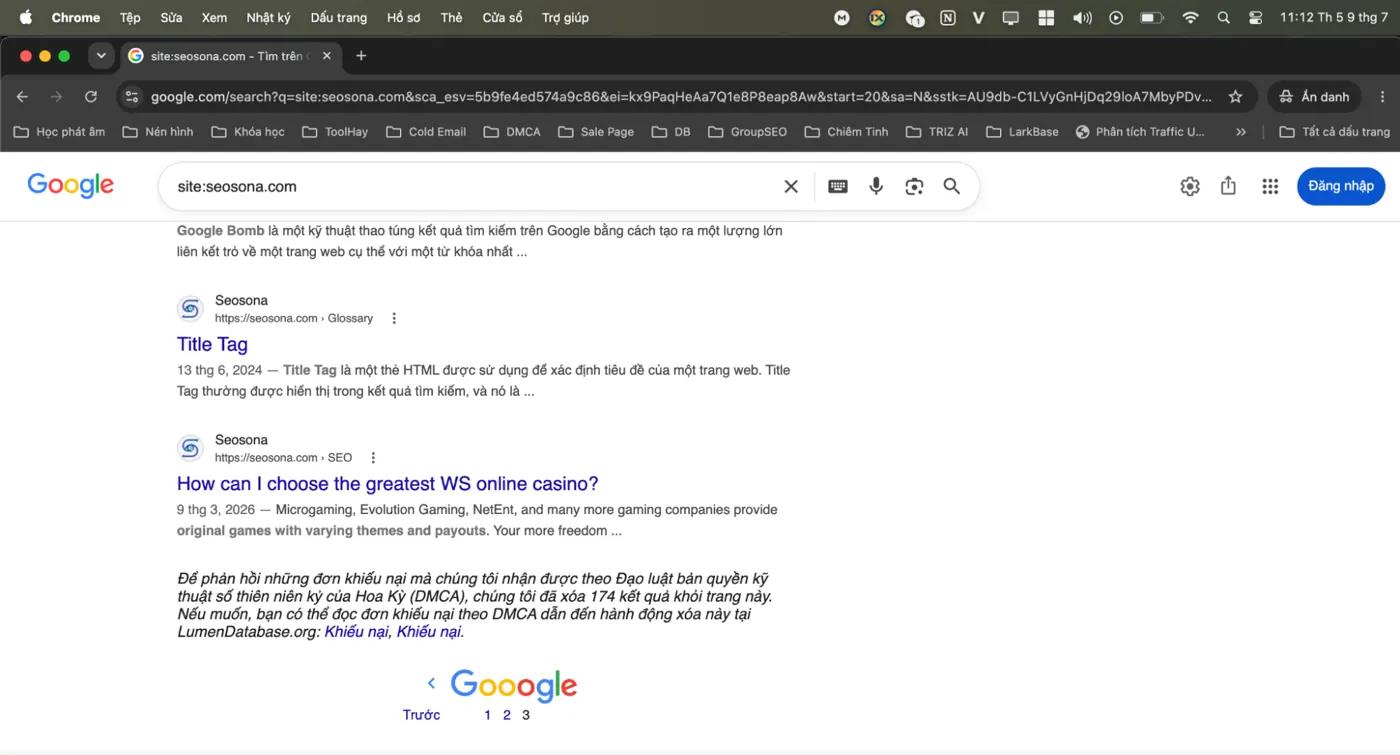
site:seosona.com drops to a mere 3 pages of results, accompanied by a cold DMCA "death sentence".Related public Lumen notices:
2. The "fake" notice signals — not a clear infringement case
Analyzing the notice text showed it was copy-pasted from another agency (e.g., mentioning “LADIGI Agency... / Fastlance...”), lacking professionalism and any specific claims about the target URLs.
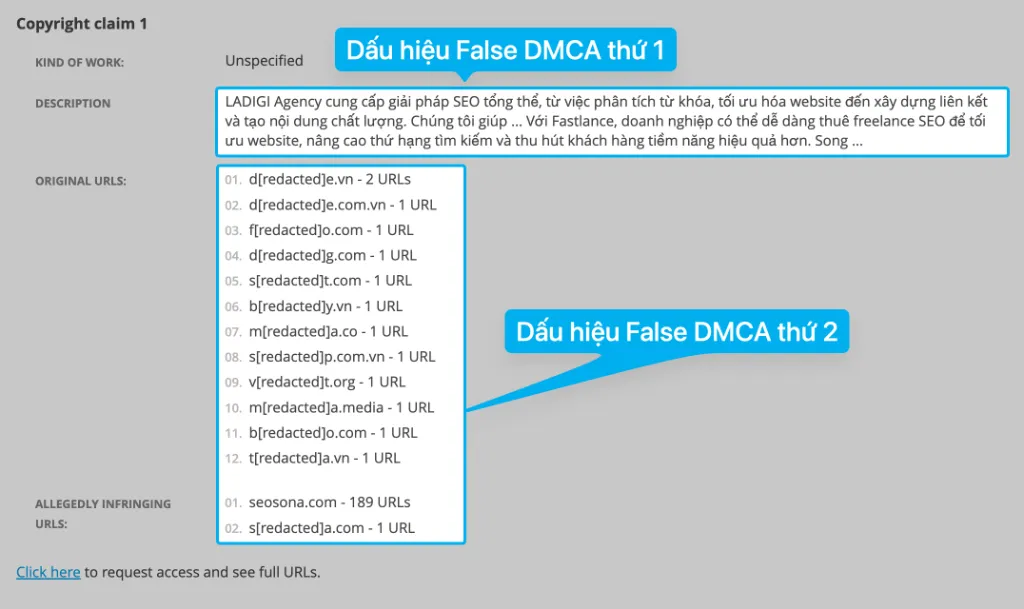
Diagnosing the attack
- Sloppy copy/paste: inconsistent notice description, containing unrelated agency content.
- Spam report: 189 target URLs vs 12 "evidence" URLs — typical abuse of automated copyright bots to exploit Google's rapid removal process.
3. The surgery: Lumen → sheet → DMCA Checker
Fatal mistake: selecting all 189 URLs and filing a blanket counter-notice (“submit all”). The law and Google’s §512(g) process require precision. Including URLs that weren't actually removed makes the filing look careless or dishonest, delaying review.
- Digging for the exact URLs: Google only shows a generic notice, so DMCA AI had to trace the Lumen Database system directly to extract the full copyright complaint.
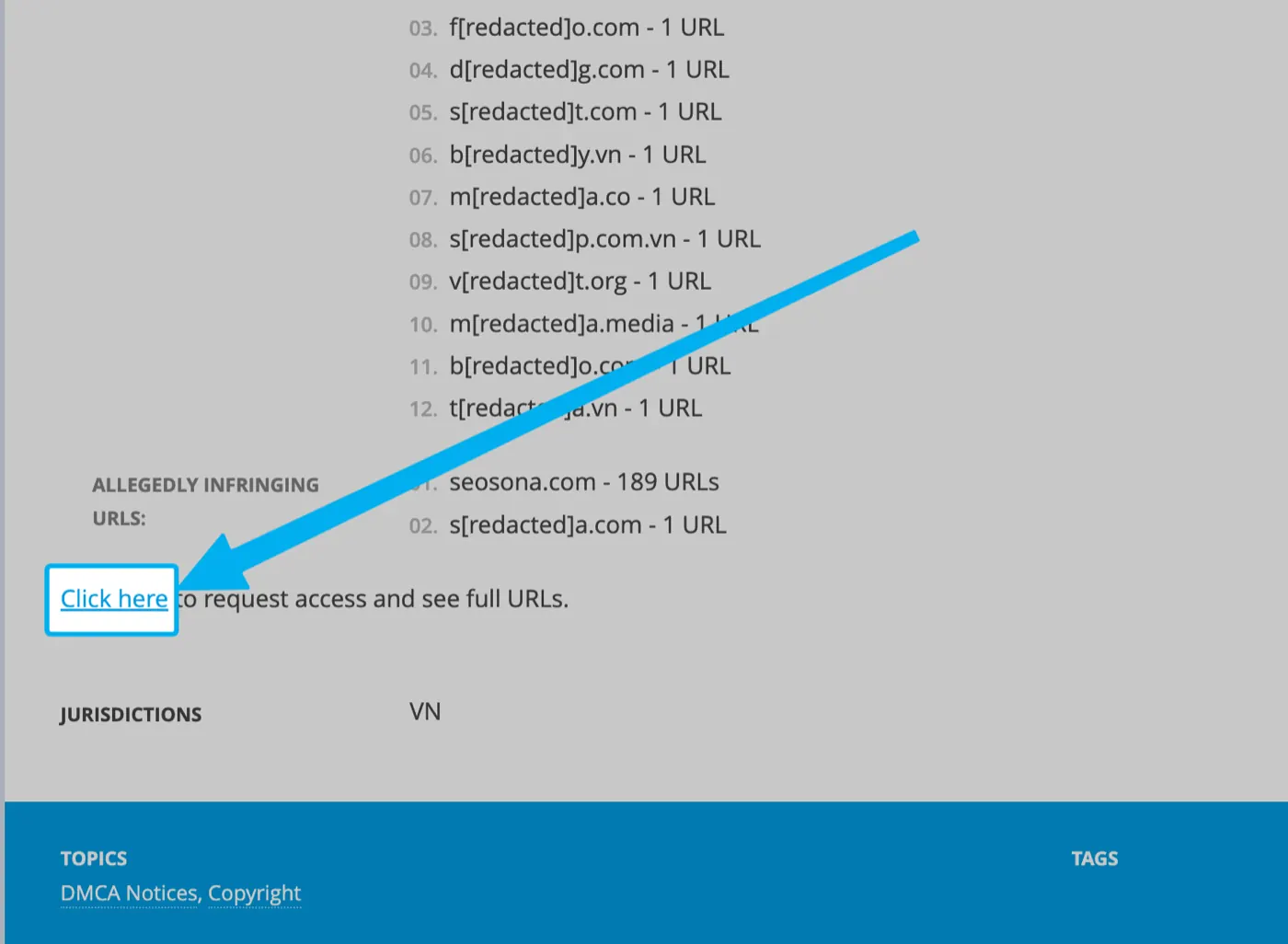
Step 1: Request access to the full notice from Lumen. 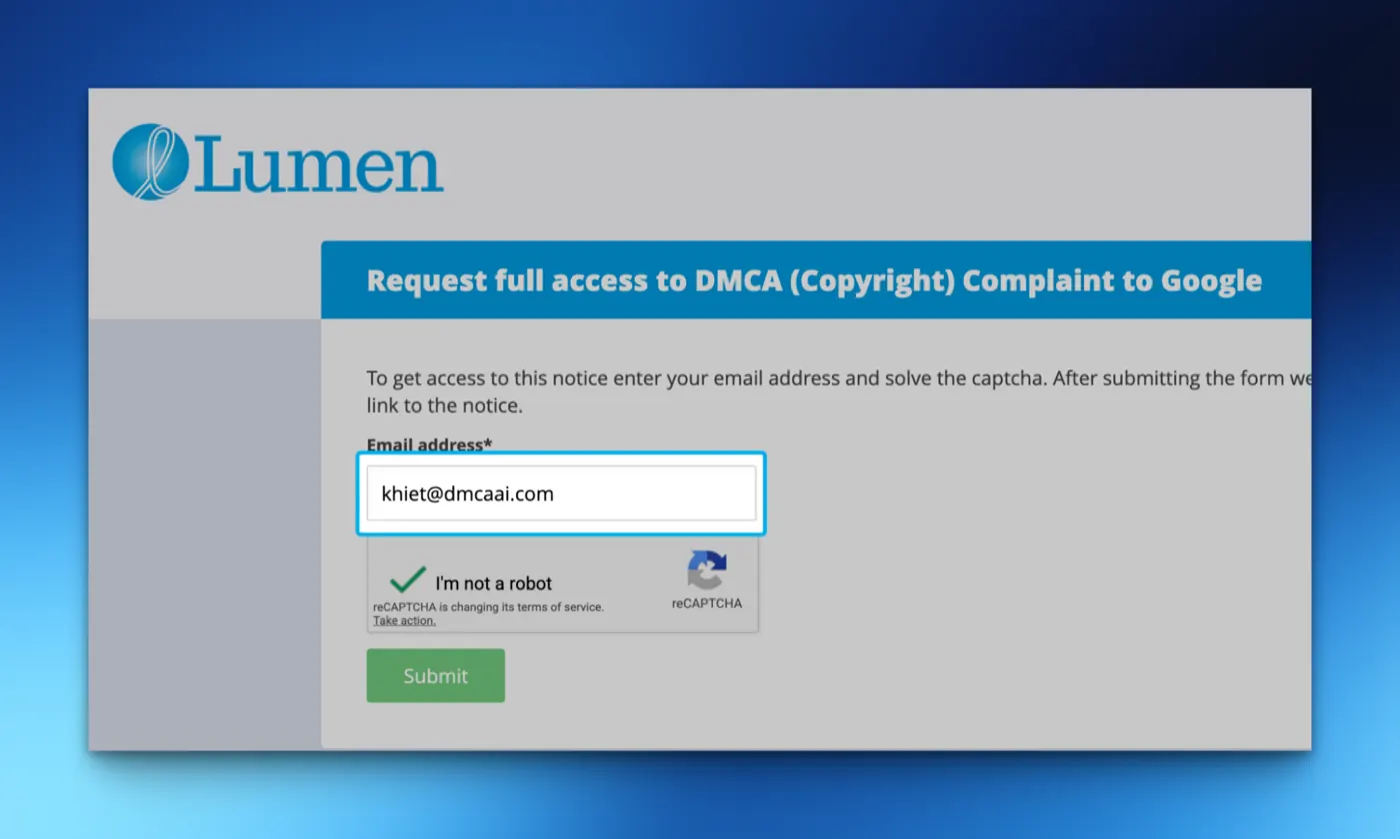
Step 2: Solve the Lumen system Captcha. 
Step 3: Wait for the access email from no-reply@lumendatabase.org. 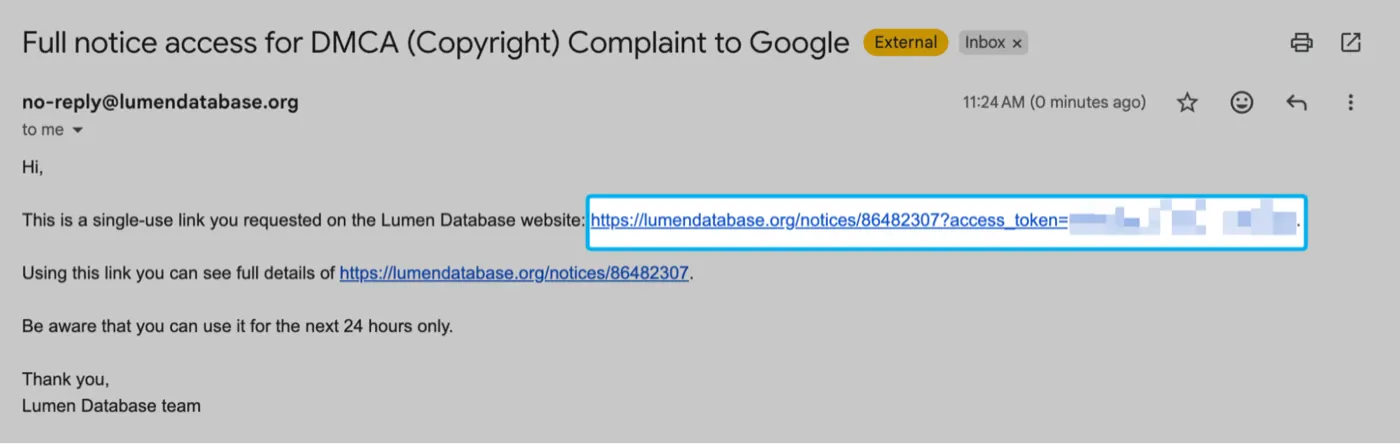
Step 4: Receive a 24-hour exclusive link to view the URL list. - Extraction from Lumen — the full target URL list:
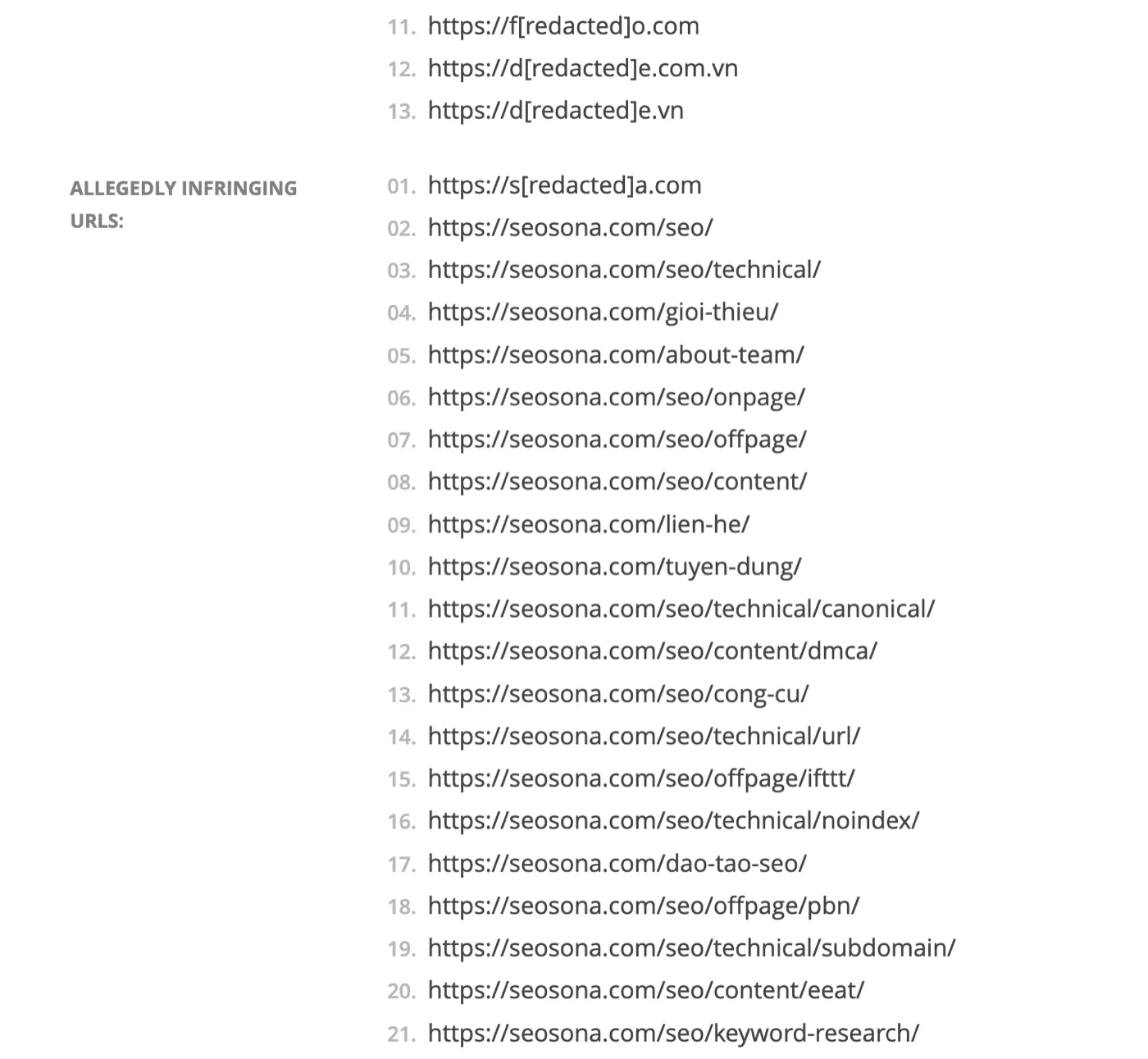
DMCA AI extracted all public complaint data from the Lumen Database system to begin the "surgery". - Merge & deduplicate in Google Sheets across notices:
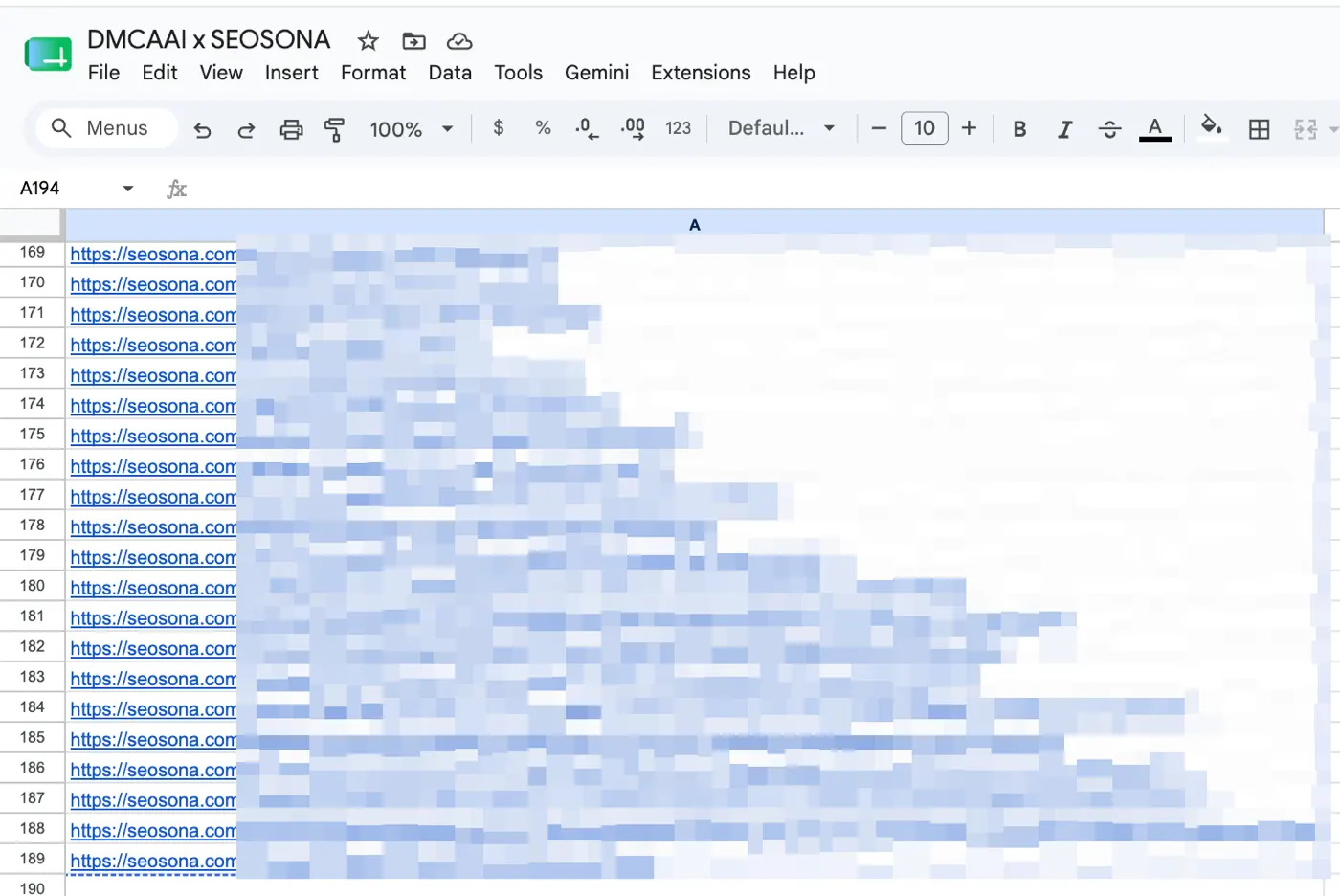
Tactical process: Merge notices and manually deduplicate to prepare the most accurate URL list. - Double-check with the DMCA Checker — which URLs Google actually removed / de-indexed:
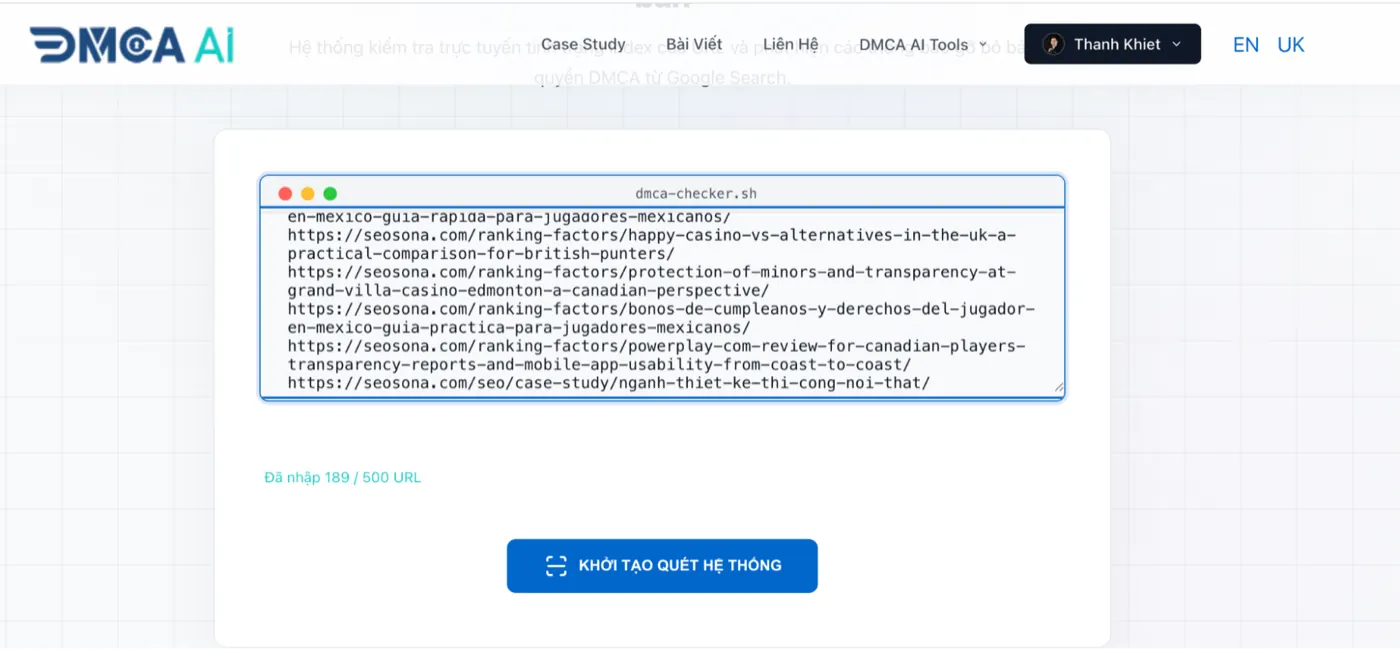
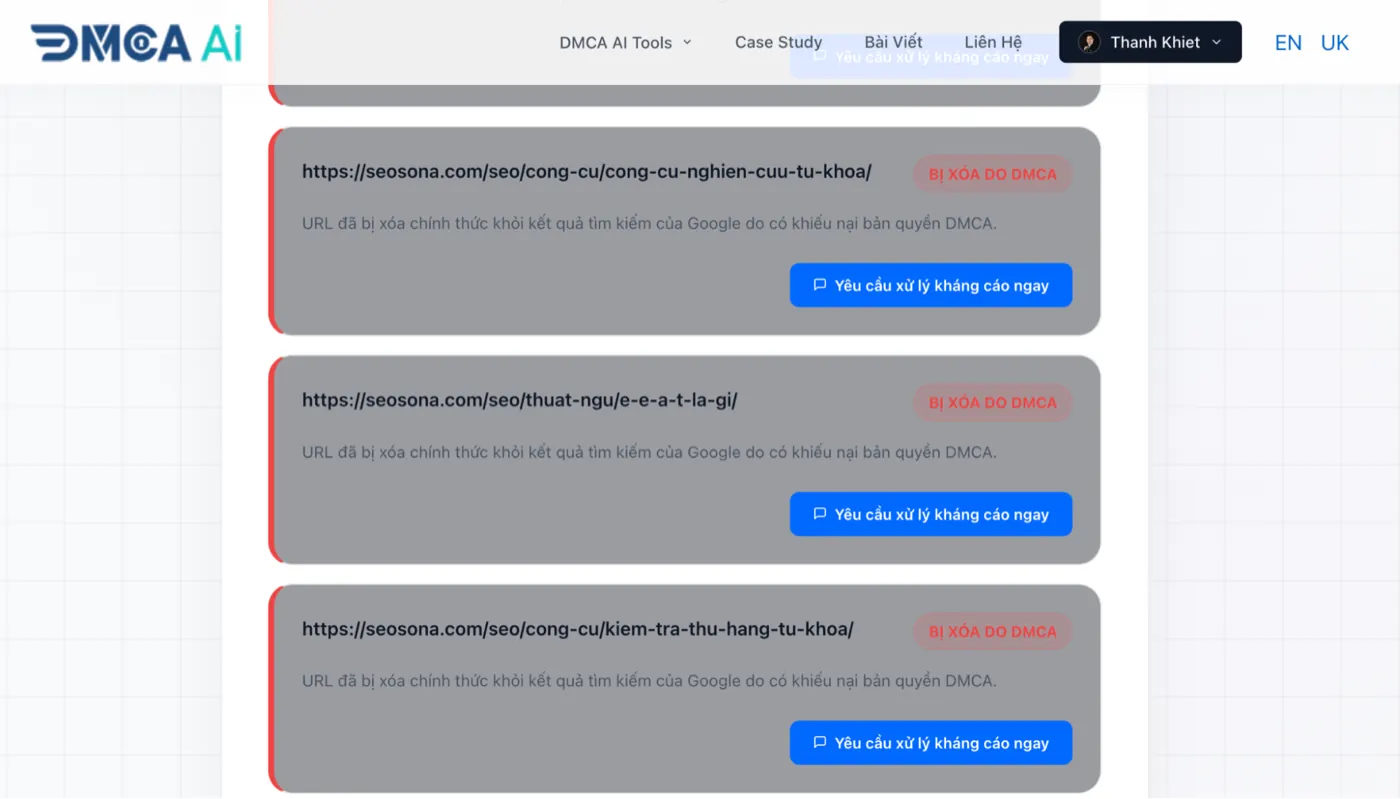
Live scan: DMCA AI’s tool scanning the 189-URL list to check actual de-index status in real time.
Core principle
Do not appeal what was not lost. Filing only the 174 removed URLs keeps the packet clean for review—vs dumping every reported URL.
4. Monitored outcome: same-day reinstatement signals
After filing work, monitoring logged a sample URL returning to index from 11:11 → 20:39 the same day (~9 hours 28 minutes on the internal alert). That is what we observed on this case—not a promise that Google reinstates every site in under 24 hours. Google’s process is still commonly described as about 10–14 business days after a valid counter-notice.
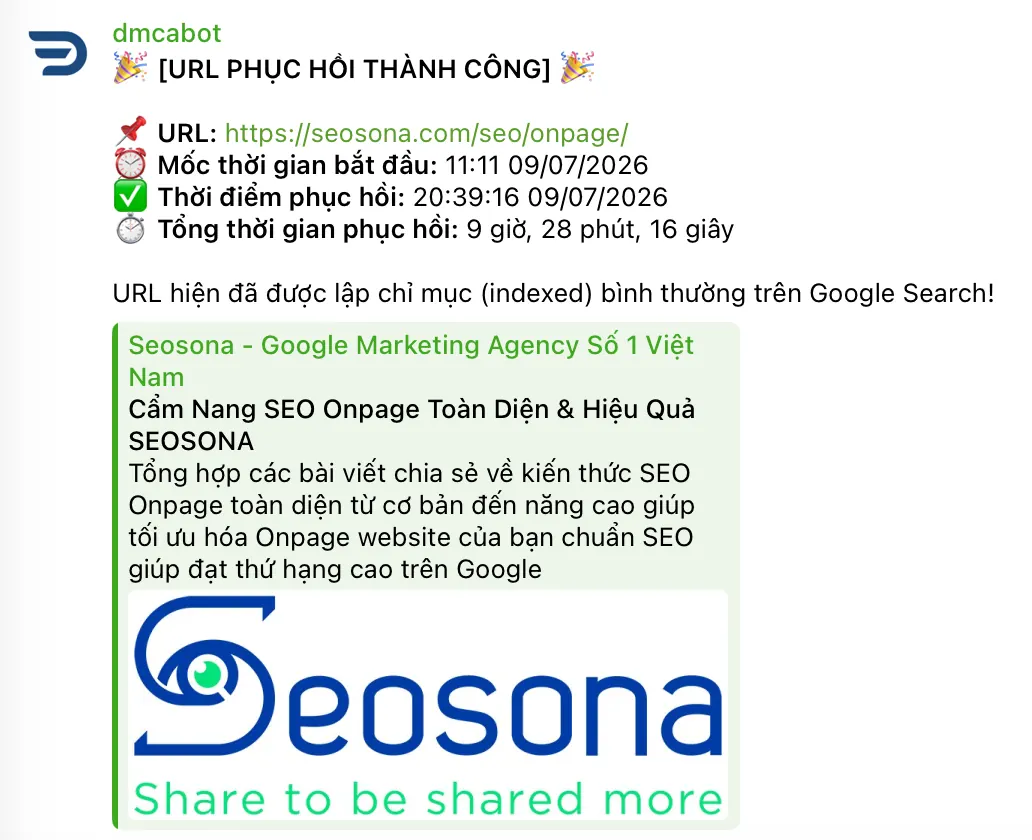
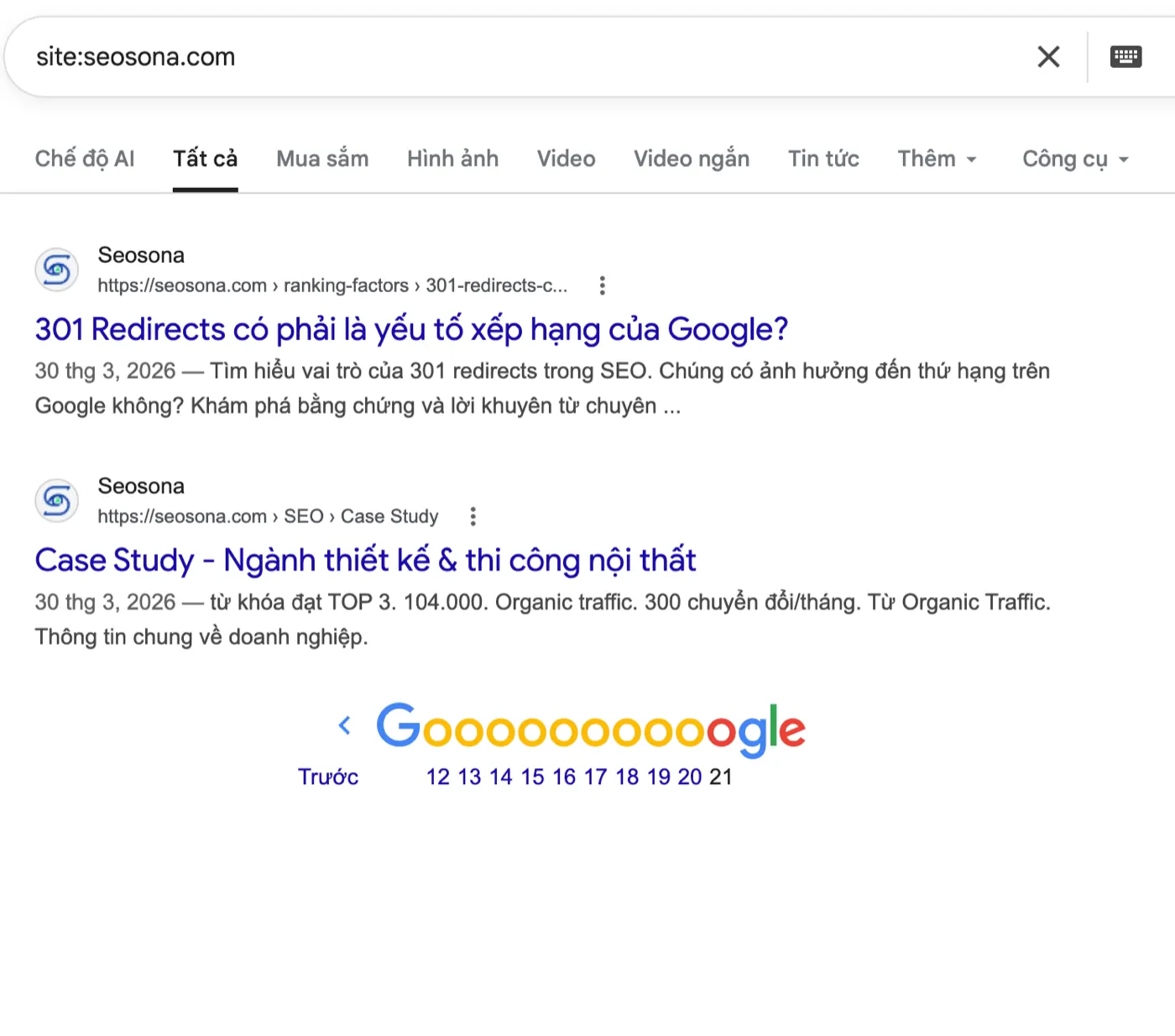
site:seosona.com restores 21 pages of results, the glaring red DMCA banner vanishes, keeping their hard-earned SEO intact.- ⏱ This case’s speed: same-day recovery signal (~9h28 on bot log)—not “Google always finishes in 24h.”
- 📈 Visible index: ~3 search-results pages at incident → ~21 pages after recovery.
- 🛡 Short offline window: less ranking shock than multi-week outages.
5. Lessons for site owners
- Appeal only URLs that were actually removed—don’t mix still-indexed URLs.
- Always double-check (Lumen + checker) before signing a counter-notice.
- If you don’t know §512(g), don’t “submit all.” Formality errors can delay or damage the filing.
Suspect a malicious DMCA campaign?
Scan removal / index signals before you file. DMCA AI’s tool helps you focus on the URLs that matter.